what lb does it take to open mechanical broadhead
LAST UPDATED: May 1st, 2015
Thirty years of collecting vintage broadheads has demonstrated to me archers will effort just nearly anything in the search for "ideal" final tackle. Everybody has their ain idea as to what constitutes a lethal ideal, each design unremarkably sacrificing ane thing to achieve another. For instance, i bowhunter concentrates solely on penetration, while another becomes fixated on cutting diameter, nevertheless another focusing on perfect flight at high speeds, others seeking a compromise for the conditions at hand. Yet many out there seem to recall their personal ideal'south the only solution and everyone else is incorrect. Nowhere does this argument become more heated than fixed- verses deployable-blade broadheads.
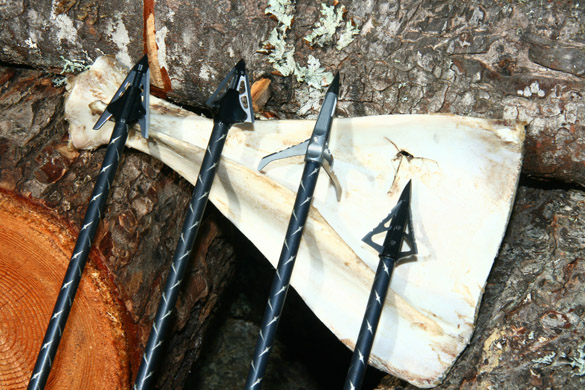
There are pros and cons to both mechanical and fixed blade heads. Do you lot know what they are?
These ii approaches stand for the polar opposites of broadhead design. The best fixed-blades are designed so that no affair what'due south encountered every role from tip to mounting threads remains completely intact. Mechanicals include moving parts, blades swinging or sliding open to maximum cutting bore simply after impact. Each blueprint has its advantages, and limitations.
Fixed-Blade Cons
The biggest knock confronting fixed-blade heads has ever been they are more apt to veer off grade shot from the fastest bows. This explains why every bit compound bows have become faster fixed-blade broadheads have grown smaller. Lay a standard New Archery Products' Thunderhead a decade onetime beside a Thunderhead Edge made yesterday and you lot'll see my signal, the former 2 inches long and one-iii/16-inch broad, compared to one by one-1/viii inches. Many argue a 1-i/viii-inch cutting isn't plenty to cut an animate being sufficiently (more later).
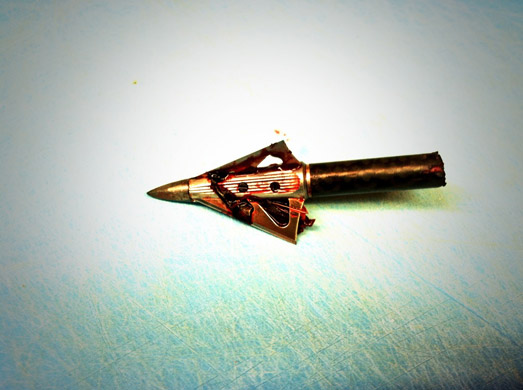
Stock-still blade heads will fly true if bowhunters take the time to fine tune their gear equally well as their arrows. Pictured hither is the NAP Thunderhead Razor post-impale.
Likewise, shooting fixed-blade heads religiously (which I do by Idaho law) requires better learning the fundamentals of fine-tuning equipment. For decades bowhunters got away with ill-tuned equipment because arrows didn't wing fast plenty to exhibit extreme wind-planning. With the boilerplate bow now pushing 300 fps that's no longer possible. The fixed-blade aficionado must besides employ larger, more current of air-resistant fletchings ("old-fashioned" four-inch vanes or feathers instead of two-inch "broadhead" vanes) to clinch proper residual between rear drag and broadhead surface expanse – a 3:1 ratio, blade surface-to-fletching-surface area a good start.
Finally, so it comes to stock-still-bract pattern, cut diameter as it direct correlates to tunability is also direct tied to how much mankind or vital organs they will cut while passing through game. There's no uncertainty in certain situations wider-cutting heads increment your odds of recovering an beast.
Mechanical Cons
The biggest rap mechanical broadheads contend with is any fourth dimension something goes wrong when a mechanical's involved – an arrow encountering shoulder blade, for instance – the broadhead automatically gets the blame. Not bad shooting or bad judgment or poor equipment set up-upwardly – it's all on the broadhead.
There's a kernel of truth to every stereotype, and at that place'south no doubt the boilerplate mechanical can't lucifer the average stock-still-blade for head-to-caput penetration. This is partly due to the mechanical design itself. Energy cannot be created or destroyed merely transferred from ane object to another and moving parts subtract energy from the equation normally reserved for pushing an arrow forward. This is too largely due to the fact mechanicals typically include wider cutting diameters than fixed-blade heads. More cut edge translates into increased friction which negatively affects penetration (which also holds true for fixed-blade heads, a 1 three/16-inch-wide fixed penetrating less than a one 1/8-inch-wide head – all other factors remaining equal). If penetration'southward paramount – bull elk or moose, equally examples — a mechanical might not be the wisest pick.
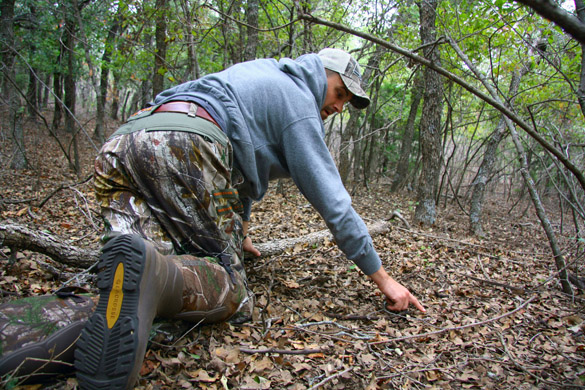
Poor shooting is often disregarded and the mechanical broadhead design is often blamed for unrecovered animals.
Mechanical designs seldom lucifer fixed-bract heads in overall ruggedness following punishing hits. Moving parts, once more, make this true. Each fourth dimension a mechanical impacts game an infinite number of variables is introduced. This opens the door to broken blades, wedging in bone to stop penetration common cold and even "pole-vaulting" off blades on angled hits. The other malfunction occasionally encountered with certain mechanical designs is premature opening of one or more than blades (especially on shoot-through screens found on modern pop-up blinds) which tin can really throw arrow flight for a loop. I'grand not saying this is chronic, I've just witnessed it ofttimes enough to sympathise the possibility.
Prepare-Blade Pros
Fixed-blades, including replaceable-blade models, are typically the strongest, nearly reliable designs effectually (traditional single-piece-welded designs the strongest). The ability of fixed-blade heads to survive impacts with steel drums or coffee cans of gravel is the mark of superior technology and materials. Failing such destructive testing's the mark of junior blueprint. Only recently I've shot through elk (Truthful-Burn down T1) and black deport (Stanford Innovations Bittersweet) shoulder blades with fixed-blade heads; both animals falling within sight. Those shots would've likely concluded differently with a mechanical on the business end of my arrows.
Every bit already hinted fixed-bract heads – especially cut-on-contact designs – out-penetrate anything else out in that location. When I'm bowhunting the biggest, nastiest game effectually (say, Cape buffalo in Africa) – or shooting express-energy traditional gear at anything heavier than a javelina — I choose a solid-welded or single-piece milled cut-on-contact (call back Zwickey, NAP Hellraiser, Solid Broadhead or Alaska Bowhuntng Supply GrizzlyStik Broadheads). Something similar moose or bull elk indicates a solid cutting-on-contact or cutting-tip replaceable-blade (NAP Thunderhead Razor, Steel Force Phathead, G5 Striker or Quality Archery Design'south Exodus). Equally game size diminishes broadhead choices lean toward wider cutting diameters and/or mechanicals.
Though I must likewise note, narrower cut diameters also introduce less "shock" on affect with game. It's a fairly common occurrence to witness animals shot with a true cutting-on-contact or "mini" replaceable-bract caput to act equally if they have no idea they've been striking after the shot. I've had many animals – shot right through the vitals – run maybe 10 or xv yards, cease to have a look around, growing wobbly and tipping over on the spot. They never make information technology out of sight because they seem to have no idea what's happening to them. So a one ane/viii-inch cutting diameter broadhead tin can certainly issue in driblet-in-sight big-game recovery…
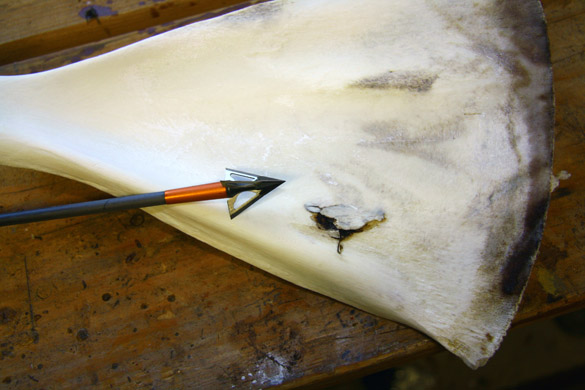
When all else is equal it is hard to crush the toughness and penetration of a fixed-bract broadhead.
Finally, well-nigh fixed-, replaceable-blade broadheads are extremely easy to keep sharp edges on — and every bit any bowhunter understands shaving-sharp edges kill more efficiently than dull ones. There are certainly mechanical designs on which blades can be replaced, only this normally includes tiny ready screws at least a screwdriver and reading spectacles for us older bowhunters. Nigh replaceable-blade broadheads can be made scary sharp by but sliding in a fresh prepare of blades and screwing them home. And if broadheads accept been in and out of your quiver through an unabridged flavour, or especially used for practice shooting, they should receive fresh blades before any hunting is conducted.
Mechanical Pros
It's safe to say the commencement modern mechanical designs (in that location where swing-blade heads as far back as the 1950s) were designed with one thing in listen – eliminating wind-planning arrows equally modern compound bows bankrupt the 250 fps mark. Since nigh mechanical broadheads include in-flight geometry holding blades tight to the ferrule or completely closed (deploying to full cutting bore simply after impact) they present no surface areas for passing air current to take hold of or push button against. The standard mechanical with blades folded flat to the ferrule in flying most often provides flight characteristics similar to field or target points. This makes them the most accurate choice for long-range shooting on calorie-free-boned, thin-skinned game such as pronghorn and also less prone to deflections in brushy conditions oft encountered while whitetail hunting.
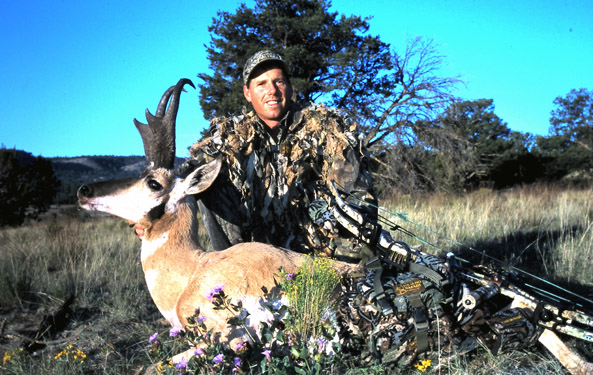
Less current of air-planning and larger cut diameters make mechanical broadheads a popular option for whitetail hunters and particularly when hunting open up-land animals like the pronghorn.
The other huge selling signal of the mechanical design is increased cut bore and devastating tissue damage. One and a half to two-inch cutting diameters (sometimes more than) would merely be impossible with a fixed-blade head. This provides an obvious advantage in many bowhunting situations, providing a wider margin for error, "wider" claret trails and faster bleed-out. I wouldn't think of shooting a turkey with their baseball game-sized vital area with annihilation but a mechanical. I've witnessed plenty of mechanical-induced claret trails actualization to have been issued from a garden hose. And if I unintentionally gut-shoot an animal in the coming season I hope to have a wide-cut mechanical producing a massive wound channel.
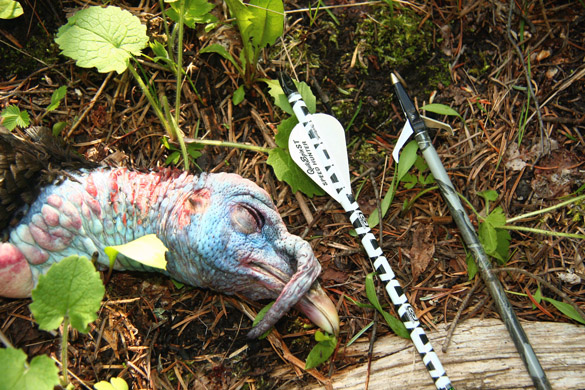
Mechanicals are as well great when shooting game animals with very small "impale-zone's" like the turkey. Pictured here is the NAP Gobbler getter.
Finally, you'll hear a lot of bunk about mechanicals failing to open after touch. I'thou here to tell you I've intentionally tried to rig mechanicals to NOT open later impacting foam targets (for use every bit practice points), wrapping blades closed with tough dental floss, even going then far as to super glue blades into the slots. They open anyhow. It's nearly impossible mechanically to make them do otherwise.
There are no absolutes in broadhead selection, but I do alive by the maximum of "matching the rig to the gig." Would I use an average mechanical on an Alaska moose hunt? Absolutely not. Would I use a mini stock-still-bract for bound turkey? Not if I could help it.
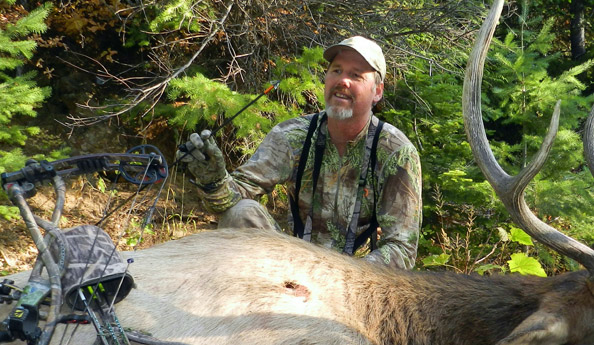
The author pictured hither, lives by the broadhead rule "match the rig to the gig". It has served him well over the years.
Simply on the average-sized whitetails about of us pursue there really is no wrong answer (unless you're at the low finish of the free energy scale; youth or woman shooters wielding less than 50 pounds and a draw length less than 27 inches). My basic rule of thumb is if you're achieving complete laissez passer-throughs on most of the game you shoot, no need to worry. If not, maybe you lot should consider a more than efficient broadhead design made for amend penetration.
What is your favorite broadhead? Why?

Patrick Meitin has been shooting bows for virtually every bit long equally he can recollect. He began bowhunting big game in 1978 and arrowed his first deer, a mule deer buck, at age fourteen. It was all recurves and forest and aluminum arrows back then. Since that time Meitin has bow-killed game big and pocket-size with everything from bootleg archaic bows to loftier-tech compounds and in 3 African countries, one-half the Canadian provinces, Mexico, France, and across the U.Southward. and Alaska. He currently lives in northern Idaho with his wife Gwyn and two Labrador retrievers.
Source: https://www.bowhunting.com/blog/2014/07/05/fixed-blade-vs-mechanicalblade-broadheads/
0 Response to "what lb does it take to open mechanical broadhead"
Post a Comment